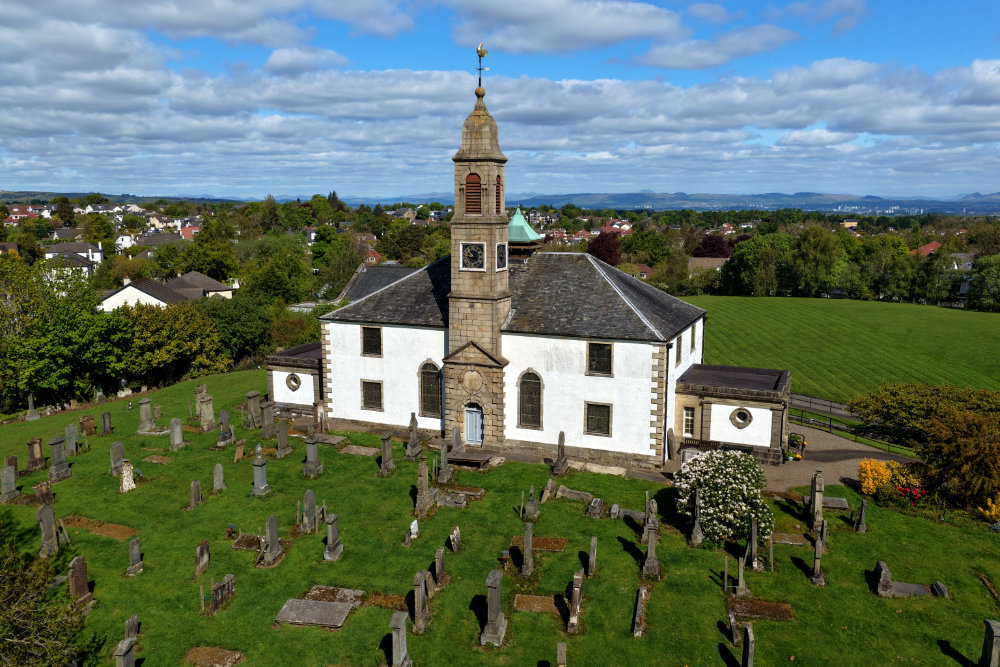
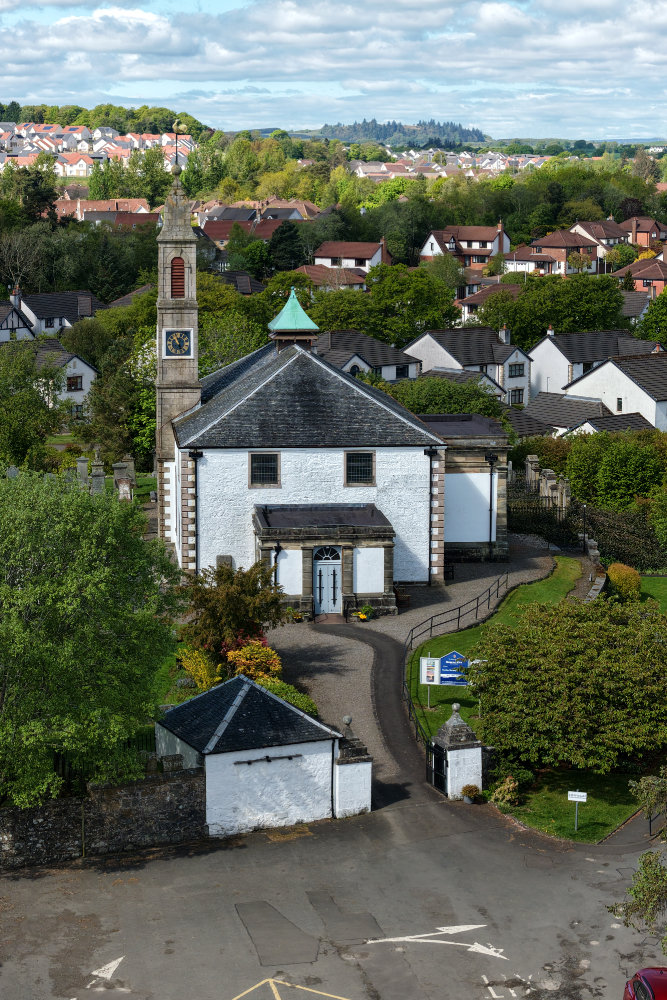
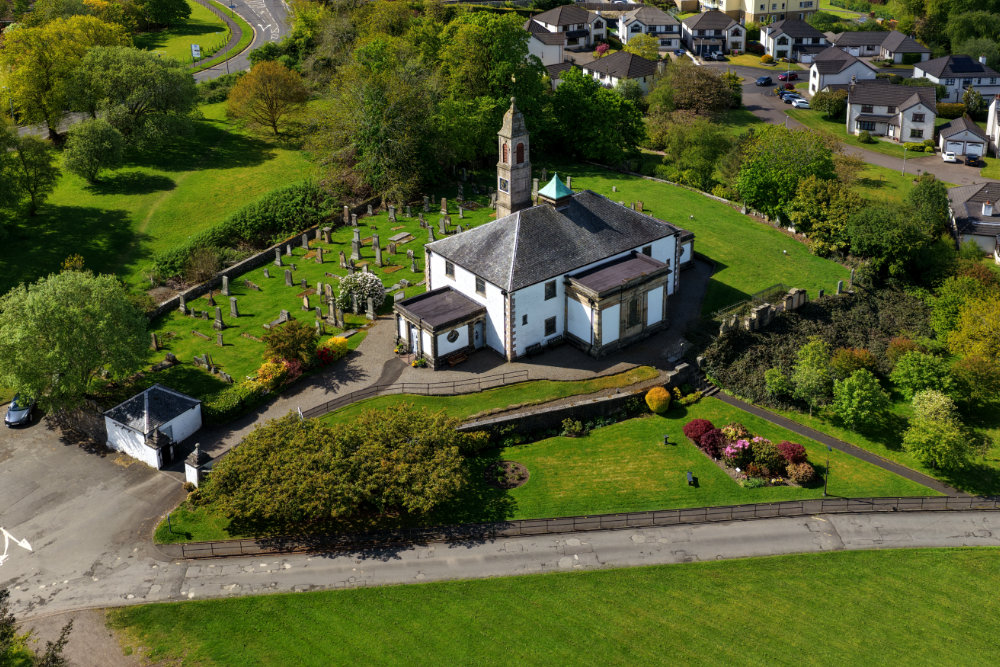
Mearnskirk Church
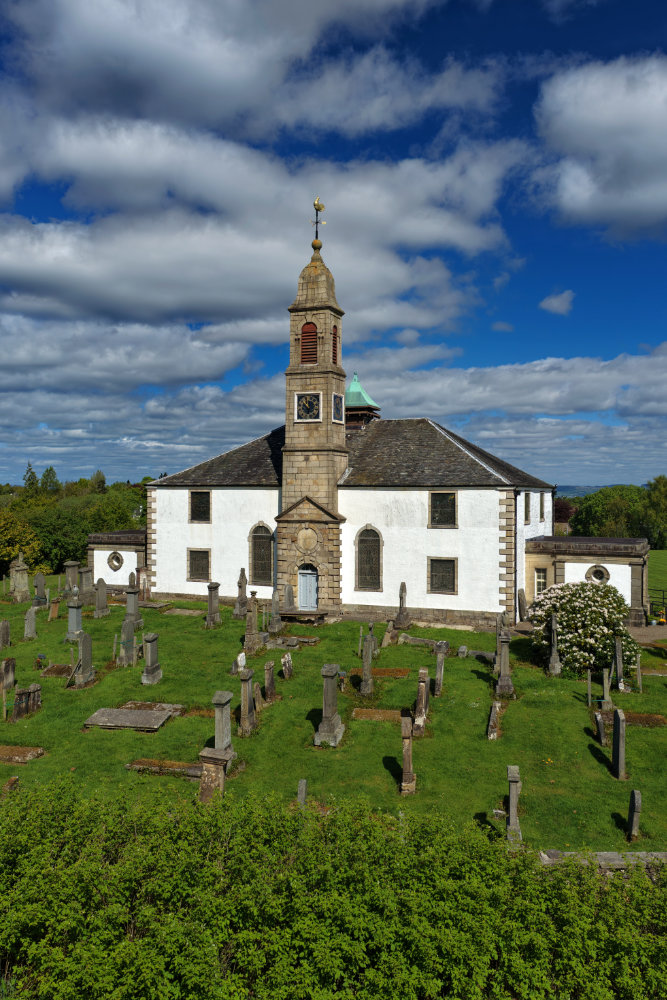
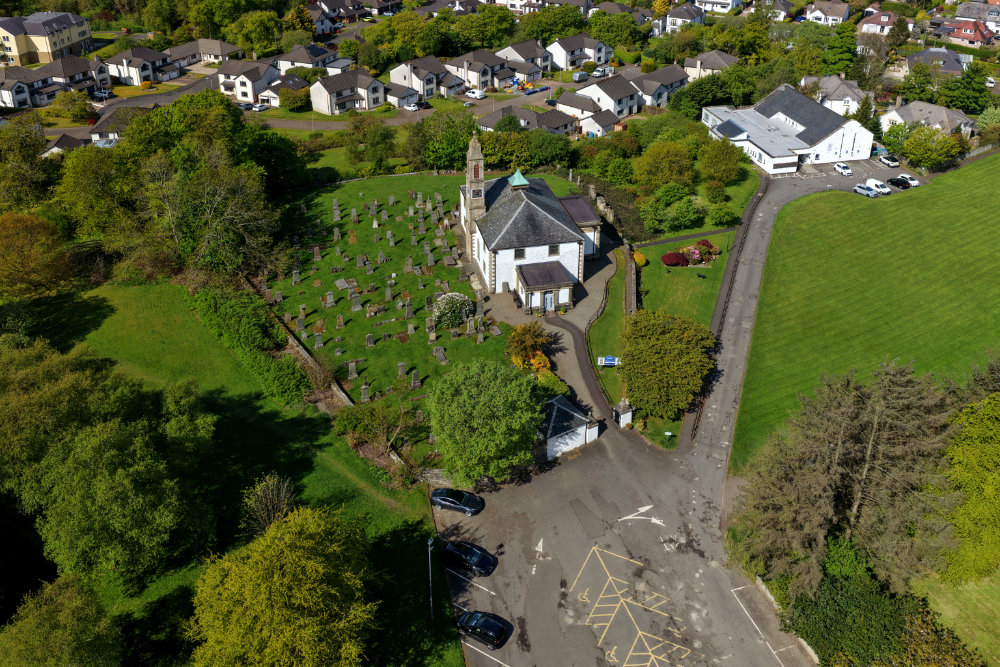
The church at Newton Mearns dating back to the 18th century
Select the thumbnails to view in full size
All images are © 400photos.uk
Often known just as Mearns Kirk this church, in the extreme southern suburbs of Glasgow, is
built on a mound, said to be of Pictish origin or even earlier. It's one of several in a straight line
across the landscape on sites which are much older than Christianity.
This building dates from 1813 though it is said to have been a site of Christian worship since around 800AD and is of particular interest because of the guard posts at the entrance to the walled graveyard. These were installed so that relatives of the deceased could guard the bodies from Resurrection Men - grave-robbers who sold the corpses to the local university for dissection and teaching.
At that time the church was isolated in the countryside and not surrounded by housing as in the present day. There were a few farms nearby, and a manse of course, as well as the Red Lion Inn two hundred yards or so to the north, but otherwise fields all round.
From the late 1700s through to the Anatomy Act of 1832 it was usual for bodies of executed criminals to be supplied for dissection but as the legal system condemned fewer people to death an alternative source of corpses was needed. Oddly, it wasn't an offence to steal a body but it was a crime to steal clothes and coffins.
Another church which had a similar problem is on the St Bridget's Kirk, Dalgety Bay, linked to below.
Mearns Kirk is a well-used Church of Scotland church.
This building dates from 1813 though it is said to have been a site of Christian worship since around 800AD and is of particular interest because of the guard posts at the entrance to the walled graveyard. These were installed so that relatives of the deceased could guard the bodies from Resurrection Men - grave-robbers who sold the corpses to the local university for dissection and teaching.
At that time the church was isolated in the countryside and not surrounded by housing as in the present day. There were a few farms nearby, and a manse of course, as well as the Red Lion Inn two hundred yards or so to the north, but otherwise fields all round.
From the late 1700s through to the Anatomy Act of 1832 it was usual for bodies of executed criminals to be supplied for dissection but as the legal system condemned fewer people to death an alternative source of corpses was needed. Oddly, it wasn't an offence to steal a body but it was a crime to steal clothes and coffins.
Another church which had a similar problem is on the St Bridget's Kirk, Dalgety Bay, linked to below.
Mearns Kirk is a well-used Church of Scotland church.