St Bridget's Kirk
To the east of Dalgety Bay, Fife

Select the thumbnails to view in full size
All images are © 400photos.uk
The kirk was built before 1170 and was in use until about 1830.
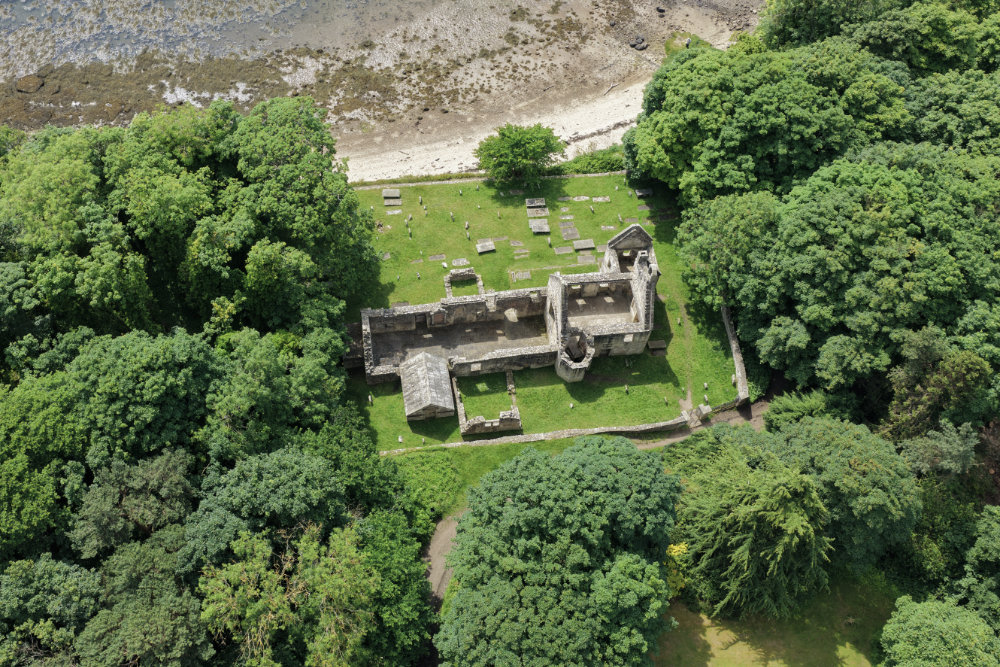
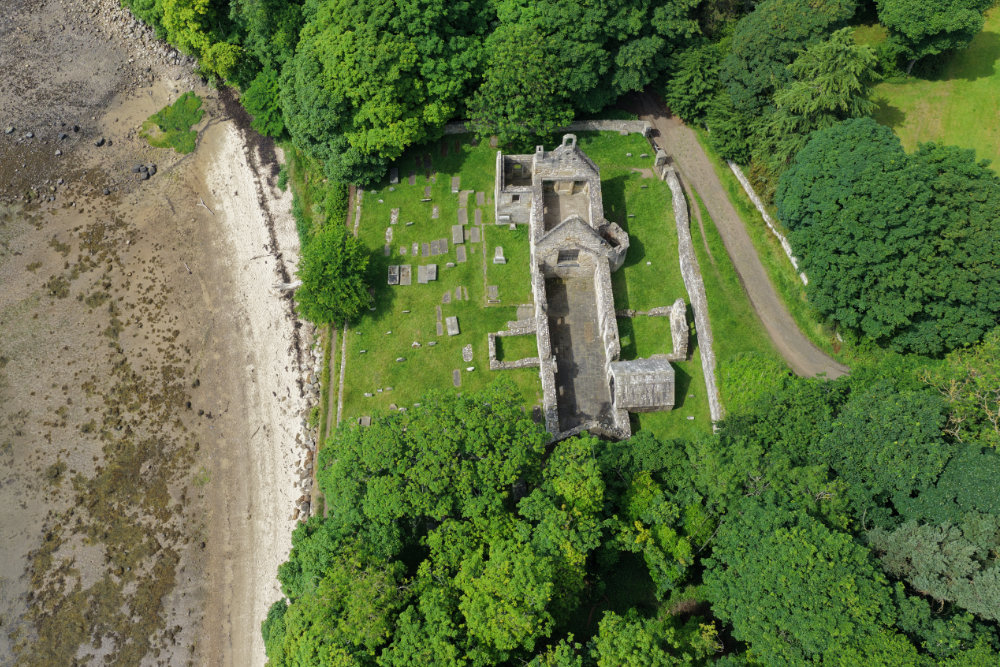
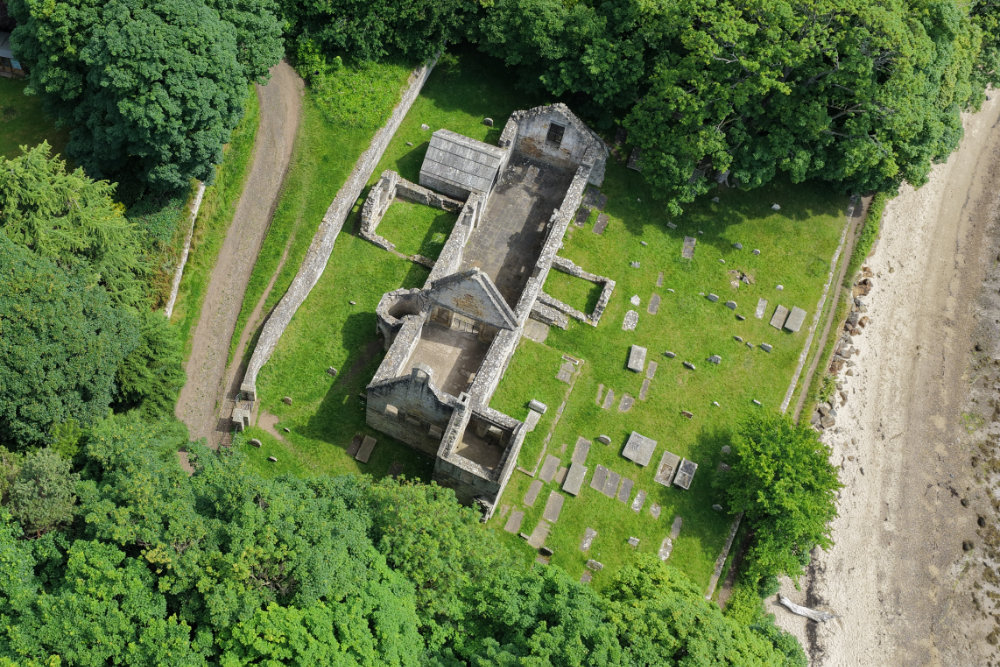
Owned by the canons of Inchcolm Abbey on the island just over a mile away to the south-east the kirk was reshaped by the Protestant Reformation in 1560 or thereabouts and again in the early 1600s by adding an upper floor (on the left from the beach side) for the use of the Chancellor of Scotland and his family. He liked a bit of comfort when he worshipped, seemingly.
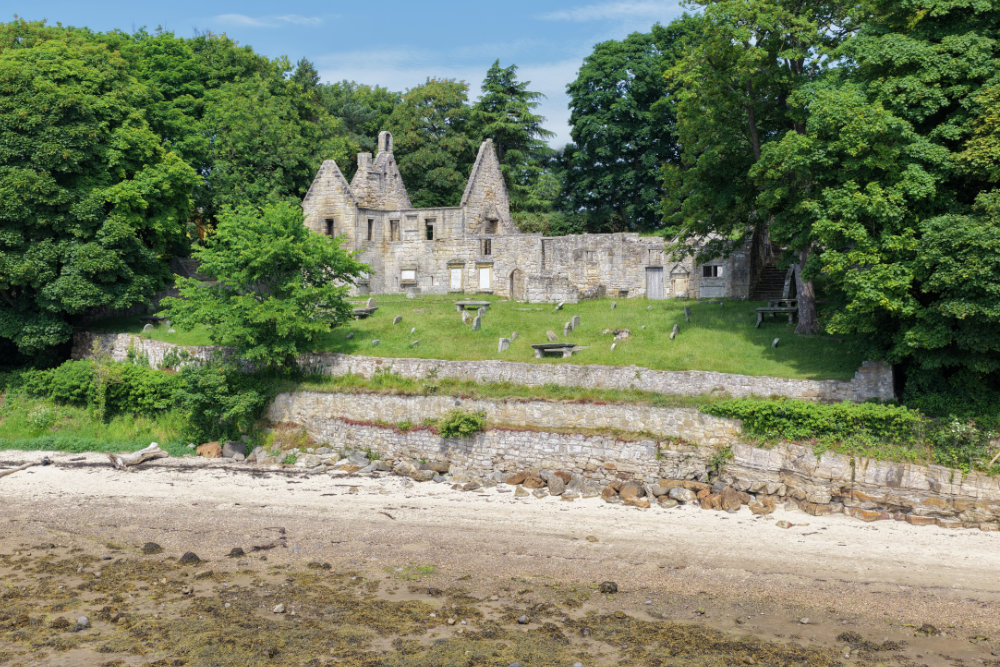
The view from just over the beach gives you an idea of its proximity to the shoreline.
Like many graveyards this one was a target for grave robbers in the late 18th and early 19th centuries, bodies being valuable when sold to universities and medical schools. A stone hut was built where relatives could guard the grave. Being close to the shore and across the river from Edinburgh made this kirk a particularly popular target.
More information on grave robbers (Resurrection Men) can be read on the page for Mearnskirk Church, linked below.
The kirk fell out of use in 1830, the congregation moved to a new site and the bell was moved along the coast to St Fillan's Church in Aberdour.
The kirk is cared for by Historic Scotland and entry is free. Access is either by the footpath which runs along the shore or by a path down the hill from the nearby housing estate. Close access by car or by wheelchair is a little tricky.
Owned by the canons of Inchcolm Abbey on the island just over a mile away to the south-east the kirk was reshaped by the Protestant Reformation in 1560 or thereabouts and again in the early 1600s by adding an upper floor (on the left from the beach side) for the use of the Chancellor of Scotland and his family. He liked a bit of comfort when he worshipped, seemingly.
The view from just over the beach gives you an idea of its proximity to the shoreline.
Like many graveyards this one was a target for grave robbers in the late 18th and early 19th centuries, bodies being valuable when sold to universities and medical schools. A stone hut was built where relatives could guard the grave. Being close to the shore and across the river from Edinburgh made this kirk a particularly popular target.
More information on grave robbers (Resurrection Men) can be read on the page for Mearnskirk Church, linked below.
The kirk fell out of use in 1830, the congregation moved to a new site and the bell was moved along the coast to St Fillan's Church in Aberdour.
The kirk is cared for by Historic Scotland and entry is free. Access is either by the footpath which runs along the shore or by a path down the hill from the nearby housing estate. Close access by car or by wheelchair is a little tricky.